Sunday, March 18, 2012

What Are Electrolytes


So, you just bought a $2.50 bottle of electrolyte water or rather salt water. Yes Electrolytes are salts. Salts are one of the most important nutrients to maintain proper body functions. Lack of salts can create a vicious cycle of malnourishment. I know many people trying to stay hydrated and often they are trying to hard.

If your urine is clear, your are loosing more water than you gain. Urine is a waste product and should have waste products in it. Studies have show that those people that add a pinch of micro-nutrient salts like Himalayan salt or Celtic sea salt have a better recovery with less fatigue. Why because salts are used in almost all chemical processes of the body.

Saturday, March 17, 2012

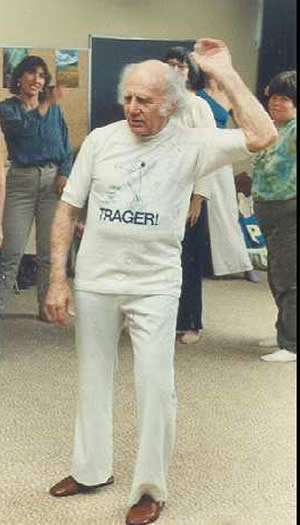
Träger and Mentastics by Harry Dalford and Julie Kingston-part of a larger article


.........I then give a very simple analogy of how muscles can be likened to a sponge. If you hold a sponge under a running tap, water will percolate through it. So the major blood vessels are the pipes feeding the tap. If you squeeze a wet sponge you will remove most of the water and if you let the sponge go it will suck the water back in.

In a muscle, blood and fluids are carrying oxygen and nutrients (amongst other things). In the process of working, the muscle uses this fuel and produces waste products that the circulation system removes to the 'waste processing plant' (kidneys / liver / skin etc). However by holding the 'Bicep' one is squeezing the 'Sponge', making it do the work, but not allowing the 'suck' part of the cycle to replace the fuel and remove the waste produce.

The longer the muscle is held in the squeeze part of the cycle the more 'waste' is produced until there is no more fuel to use. Now, the waste is a very important part of the process because it is a chemical, (essentially acidic), which acts as an irritant to the cells and nervous system receptors in the muscles and connective tissues in joints. This chemistry, for example lactic acid, is the stuff that makes your muscles feel tired and achy if they have been over worked. This is a clever design feature in the form of a bio/electrical/chemical safety valve which sends information to the brain which then sends other information to the muscles telling them to release the workload or create movement thereby allowing the "suck" part of the cycle to take the waste products away so that they are not irritating / stimulating / eroding the muscle / connective tissues / nervous system receptors.

By allowing the muscle to go though its complete design process it works efficiently and is comfortable and movement can actually be pleasurable.

Friday, March 16, 2012

The Living Matrix of Bones


Lloyd Mills Lecture Notes -3/16/12
by Wendy Woods

Quite literally cell growth, regulation and maintenance will not occur in your bones unless they are stimulated or are physically stressed. But bones are not just a separate system in the body that are isolated and functioning independently. Bones are not something that we only have to look at later to avoid osteoporosis. Bones are a living matrix woven into the very foundation of our health.

Bones effect all functions in the body from blood cell production to immune cell production, energy storage, maintaining mineral/electrolyte balances and most importantly communication. Bones communicate through force. With each impact, twist, pull, the bone produces tiny electrical signals to communicate to the bones cells to either build, breakdown, or maintain. This communication is key in the bodies ability to support activity or recover from a surgery. The skeletal system effects all other body systems and regulate itself independently of the brain. Your bone health will have a high impact on your overall well being.

Weight training and regular physical activity is the most common advice that a Doctor will give you to support your health.

So make the choice of health.

Wednesday, October 19, 2011

The Number One Form of Self Care


We can change our posture and health simply by changing the way we breath.

How to identify if you are using the right muscles when you breath:

-Locate the diaphragm by placing your hands lightly around the lower rib cage.
-Now take a big inhale

If you notice that you initiate your breath from your shoulders and they move up, more than your ribs expand out or you find that it is difficult to take a deep breath without initiating from your shoulders, then you are likely using secondary breathing muscles and your diaphragm could use some training and reeducation.

Other common symptoms of poor breathing pattern include but are not limited to head aches, tight neck and chest muscles, anxiety, depression, fatigue, sleep disorders and digestive problems.

Breathing is the foundation of all movement and functions of the body. When we are not breathing well, we are not living well. The breath goes through many adaptations a day. Some times the breath gets stuck and does not return to normal function. This is common when responsibilities pile up and the mind races, through repetitive activities or when we don’t let go of an emotional experience and stressful states. Because we have voluntary control of respiration, we can use it as a tool in our health care program to help restore healthy respiration. Different types of breathing styles facilitate different functions and activities.

Types of Breath Techniques and Applications:

1. Holding the Breath, is good for heavy load baring activities like lifting weights or quick movements because it creates a back pressure that supports the integrity of the spine. Holding a deep breath will also increase lung capacity and is used to train deep sea divers.

2. Directing the inhale or exhale, deliberately trains the capacity of the lungs and stretches and strengthens the diaphragm. This is commonly used in cardio training, child birth, lifting weight, regulating extreme emotions and pain control. It focuses the mind with a goal. Often this directed breathing is performed with a set count like 5 seconds of inhalation and 5 seconds for exhalation. The number seconds will vary based on needs, ability and practice.

3. Passive breathing, is the ability to allow the breath to move uninhibited and without directly trying to change it. This is the breath that we should use all day as well as for creating states of relaxation. It involves the ability to deepen the breath by moving out of the way and trying to release tension in the body so that the breath can fill the lungs fully with very little effort. The motto for this style is make the breath ‘long, smooth, slow, deep and even.

In the beginning brining attention to the breath is usually easier to practice in a comfortable quiet place or where you can focus easily. As you get more accustomed to breathing, practice it throughout the day. For example in the car at a stop light, in the grocery line, just before bed, during exercise. The more you practice the more you will restore your natural respiration and support a happy life.

Saturday, July 30, 2011

Learning How to Relax


How much challenge is too much? How much emotional, physical or psychological stress can one handle?

The question is not how much challenge can we handle but how well can we recover and return to homeostasis after we have been challenged? One of the first questions I ask my clients is how do you relax. Most are taken back by the question because in the fitness industry, it is only recently that the value of relaxation has been recognized by medical health professionals to be directly related to our ability to have a healthy and happy life.

The ability to relax and recovery from a sympathetic nervous system stimulation varies from person to person and is influenced by a host of factors including but not limited to history, temperament, and type of challenge. What is stressful for one person may be difficult for another person to assimilate. Knowing what challenges you and tracking your reaction is key. Do this by listening to how your biology responds. Does your heart rate increase, can you sense tension in your body, is your breathing restricted?

Exercise: Practice a full body scan. Begin in a comfortable place where you can focus on your body like in your bed, chair, or lying on the floor. Start by tensing the muscle in your feet, then while maintaing the tension in your feet began to tense your entire leg. Then both legs are tense. Continue to systematically tensing the muscles in your body until your entire body is tense. Once every muscle is tightened, hold a few seconds, then all at once relax everything. Let go of all the tension more and more, breathing freely and deeply. Repeat the exercise until you feel a deep sense of release on the letting go phase of the exercise.

This exercise will help you to learn what tension feels like and what relaxation feels like. Practice checking in on your state of relaxation throughout your day. This is a good beginning in learning how to sense your body, feeling the contrast between contraction and release.

Sunday, July 10, 2011

A Breathless Lifestyle

How do we avoid breath creating distortions and return to a natural state of breathing?

A breath distortion can effect any part of our breathing cycle; Inhalation, Exhalation and Pause. The Pause cycle of the breath is where most problems occur. The 'Pause' happens at the end of the exhalation and is the time in which we are gathering energy for the next inhalation. Without the pause our organs are compromised and will remain in a state of chronic tension and poor function. Also our nervous and circulatory system are compromised. Our overall sense of well being becomes limited.

Any event in our daily experience can cause a change in our breathing cycle and with each experience our breath is adapting as we integrate or digest our experiences. Like a tree adapts to stillness after being moved by the breeze. The problem arises when we interfere with our ability for our breath to normalize. For example, if you did not allow your breath to normalize after doing a running sprint and then went into a intense conversation with your boss or loved one, the stored tension in the breathing muscle would quickly form a habit of breathing that is distorted and will be carried through to all your future experiences.

Another example deals with being parents or caregivers. Think of a child that is crying. The neurology of a child lacks the experience to self regulate and adapt to this completely new experience of intense emotions. The child sensing the environment changing relies on the parent for cues of comfort. If these cues are not effectively communicated, the child will begin to build an internal tensional habit that will effect their breathing physiology for a life time. Parents are initially responsible for supporting their children in returning to a natural breathing state.

We currently live in "Breathless Society" or a society in which most of the citizens participate in a lifestyle that does not allow for breath awareness and adaptation. The speed at which we transition from activitiy to activity has a lot to do with how our breath is able to return to a normalized state.

Symptoms of a distorted breath pattern include and are not limited to:
Chronic Anxiety
Prone to Anger
Depression
Chronic pain
Digestion Issues
Sleep disturbances

To develop a relationship with your breath will take a kinesetic sense or a sense of your body as it is breathing. If you are not familiar with your breath in a natural state seek out a teacher, like me, to help you learn an invaluable skill.

Monday, July 4, 2011

Work the Breath Muscle


The Diaphragm, the primary breathing muscle, is the only muscle that lies perpendicular to the spine in the body. When we don't use our diaphragm to breath we can end up with what I call a paralyzed diaphragm. A paralyzed diaphragm occurs when we use secondary breathing muscles like the commonly used pectorals,sterno-cleido mastoid and the scalene muscles. If one has a paralyzed diaphragm it is also likely that other primary breathing structures will be inhibited as well, such as the ribs. The rib muscles, tendons, cartilage and ligaments all move with every cycle of breath. It is important that every rib moves with expansion and contraction. Unresolved, intense past emotional experiences are one reason for breath distortions and can remain stuck in ones breathing cycle.

Exercise: Try bringing your attention to the place where the air is just entering your nose. This is the gate from the outer world to your inner world. As the air enters your body begin to track how it outlines your inner landscape or the space that is inside of you. Use your breath to find how each rib moves exploring the entire dimension of your rib cage with each breath: The front ribs, the side ribs and the back ribs. On inhalation, feel your ribs began to expand from the lower ribs first. Then like a ladder how each rib expands upward until you get to the very top of the rib cage at the base of the neck.