Monday, June 13, 2016

Do You Know Where Your Pelvis Is At?

With the right help, finding your pelvis can be easy.

At Meta Mvmt  we believe that muscles ought to engage when you move, however, for most of us our movements are not fully linked up to our nervous system and this creates poor neuromuscular movement patterns and posture.  

When you walk your counter balance muscles help keep your body upright to maintain your gait cycle.  If a counter balance muscle doesn’t engage when it’s called upon, then it can distort the whole structural system thus putting more compression, pressure and tensional forces in areas of the body that aren’t designed to handle that stress.  

Meta Mvmt uses a Functional Movement Screening from Craig Leibenson, to access your poor movement patterns and postural misalignments.  When your movements have support from our muscles, then our performance increases, load distribution is spread well and our counter balance and tensigrity system can work more efficiently.  

We use basic exercises to see if you have the correct muscle firing order, like the in the Pelvic-Up exercise.  In this exercise many people feel it in their back or hamstring, this is a sign of poor muscle firing.  

The Pelvic-Up, is a great exercise that mimicks gait and hip extension. Gluteus maximus is the primary muscle for hip extension.  So the question is, does your gluteus muscle actually activate in a Pelvic-Up?  What percentage?  Both sides? Often times a pelvic imbalance can create a muscular imbalance and may create further dysfucntion during any movement while standing, sitting and walking.  

Do you know where your pelvis is? Probably not and  that’s why we need postural assessments from skilled individuals.   

We combine many philosophies together to find balance vertically, horizontally and diagonally to ensure good balance, counter balance and functional sensory motor integration which creates neuromuscular efficiency. 


Visit METAMVMT.com today to find out where your pelvis is.

Saturday, February 7, 2015

Feeling Your Organs


By Wendy Woods
02-07-2015

With a tone of disbelief, my client asked me the other day, “How could she feel her organs?”.  She thought is was just a woo-woo thing and I clarified that it was quite possible.

First of all we have receptors in our body that allows for us to create a “Body Map”  or a sort of GPS system of were we are in space both internally and externally.  Using our GPS systems is how we can sense our parts within a whole system. This is done through sensing receptors located throughout the body including the organs spaces. 

Baroreceptors or pressure receptors allow us to glean relationships to our parts and create detailed maps of spacial relationships within our body. 

The diaphragm is one of the main pressure changers of the body and triggers our ability to be more aware of our parts via internal pressure changes.  As we take a deep three dimensional diaphragm inhalation our internal organs, located just underneath the diaphragm, can easily move/glide up to an inch and more in an healthy individual.  This is true on the exhalation as well.

Practice creating a body map of your organs by using diaphragm breathing.  It may help to have a general visual of where your organs are so that you can feel and better create your map. If you are new to sensing your body it will take some time to feel it again and you may need a coach to guide you. Also, a racing mind and distracting environment will inhibit your ability to concentrate on the subtle changes occurring internally. So set yourself up for success by chooses to do your awareness practice in an environment that facilitates your concentration.

This is one of the first steps in helping to reduce stress on your organs, creating a relationship with your body and creating a personal health care program. 

So before you go popping some pills for your Kidneys, check to see if they have space to move a glide with your inhalation and exhalation. 


Friday, July 5, 2013

Stretching and Fascia

We commonly relate to stretching as a muscle based practice.  I invite you to consider that there are other tissues of the body that have the ability to stretch and benefit from specific stretching practices.   All your tissue are plastic and have the ability to stretch, change and move, including the bones.

Fascia is considered to be the main tissue that holds the structures of the body, not the muscles and the bones.  Fascia is a system in itself similar to that of all the other major systems like the cardiovascular, endocrine, GI.  If you were to remove all your fascia it would still look just like you because it holds everything together.  I have heard it thought of as a structural "one-sie", by Marc Drobnick.

The most profound thing about fascia is that it is everywhere in the body and can move, change and communicates.  Becoming aware of the feeling of fascia is one of the first ways to sense the interconnectedness of all the tissues that form you. If you move one part of you all other parts will be effected.

The idea of moving and stretching more than just muscle is common place in practices like Yoga and Qigong/Tai Chi.  The view of the body is expanded, instead of emphasizing muscles, all the tissues of the body are concentrated on and have a relationship to one another.

Tai Chi movement or Yoga poses can be specifically effecting an entire energy meridian from head to toe. When you do a forward bend you effect the entire backside of the body as well as the Kidney channels that are embedded in the fascia.

Bing Lee, Tai Chi/Qigong Teacher in Denver Colorado explains that the energy meridians are embedded in the fascia and if you move the fascia you move the energy. If the fascia is not moving the energy is not.

Fascia is a system that is well known to all physical therapist, massage therapist, craniosacral therapist, personal trainers, and hopefully doctors.

by Wendy Woods


Monday, July 1, 2013

How to Create a Lasting Exercise Routine and Enhance your Performance


Imagination is a powerful force that enhances your performance of anything you do especially exercise.  This has been known by top athletes for years.

If you hate working out and dislike how your body feels afterwards, than it becomes less likely for you to workout again.

Studies show that when you associate a positive feeling with an action it is more likely for you to choose that action again.  We associate feelings with actions.

Freud first spoke about this neuroplastic idea in 1888 but today it is referred to as Hebb's Law.   Freud theorized that when two neurons fire simultaneously, this firing facilities their ongoing association.  Freud emphasis that what links neurons is their firing together over time (neurons control movement). Neurons that fire together wire together.

You can improve the way you feel about exercise by recalling a very positive memory during your workout that results in a palpable feeling in your body or even make you smile. Then take on that next exercise while maintaining that good feeling.

This is why imagination and feeling that you like your workout, during and after, is important factor in maintaining and creating a healthy lifestyle.


Thursday, June 27, 2013

Is Technology A Distraction?

Imagine this:

True Story. You are in the middle of a a great workout and you are just about to start your box jumps.

Anonymous
is standing in front of the 2 1/2 foot box, he is getting psyched up and just as he starts his leap his phone rings.  It distracts him just enough so he is not able to get his feet onto onto the box and in mid flight his shins crash into the box and his body folds over the box.

My friend who shared this will remain anonymous and was able to laugh at his scrapped up shins in the end.  And of course he realized that he needed to pay more attention.

So the answer is YES, techonoly is a distraction.


Friday, June 21, 2013

Sustainable Fitness


If we loose the ability to bend over and garden then we loose the ability to eat.  Yes I know most people get there food from the grocery store.  However, as the food quality standards change, so will our ability to meet our nutritional needs.

The ability to do Primal Movements allows a person to be able to sustain their life by giving them the strength to grow and harvest food and take care of daily chores essential to being able to live and sustain their life.

Primal Movements are defined as movements that up sustain us from infancy throughout our lives.  They begin as reflexive responses in utero and develop into well coordinated complex movement patterns that are the foundation for giving us strength, function and good body mechanics.


These Include:

1. Rolling Over  2. Crawling  3. Squat  4. Push/Pull  5. Reach/Grasp  6. Lift/Carry 7. Stillness/Yield

Qualities Needed:

1. Endurance  2. Strength  3. Recovery  4. Focus

***Note: there is a wrong way to do these above movements


Friday, June 14, 2013

Common Daily Activities That Can Become an Exercise

Common Daily Activities That Can Become an Exercise
by Wendy Woods

I love my profession because my regular exercise program is still a part of my daily life routines.  This was true for folks that lived before gyms and desk jobs too.

People say "Oh you can't get a workout from cleaning or doing house chores!"  This couldn't be more false, especially, if you are using good body mechanics.  Using good body mechanics educates your body and increases strength and function every time you do the movement.  The problem is do you know when you have an opportunity to increase your fitness ability.

7 Daily Opportunities for Exercise:

1.  Sit to Stand
2.  Pick Up The Sock
3.  Carry It
4.  Get up From The Floor
5.  Roll Over
6.  Reach For It
7.  Stairs

Most of us overlook these important 'transition movements'.  Instead we drive, use our arms to stand, lurch or throw our bodies in our attempt to "take the easy way out" and lose our ability to perform the daily movements with good form.

One of the first things I teach my clients is how to sit down and stand up in a beneficial way, increasing longevity and decreasing possible injury over time.

Awareness Practice- How do you get into your car?


Sitting risks: How harmful is too much sitting?

What are the risks of sitting too much?

Answer

from James A. Levine, M.D., Ph.D.
Researchers have linked sitting for long periods of time with a number of health concerns, including obesity and metabolic syndrome — a cluster of conditions that includes increased blood pressure, high blood sugar, excess body fat around the waist and abnormal cholesterol levels.
Too much sitting also seems to increase the risk of death from cardiovascular disease and cancer.
One recent study compared adults who spent less than two hours a day in front of the TV or other screen-based entertainment with those who logged more than four hours a day of recreational screen time. Those with greater screen time had:
  • A nearly 50 percent increased risk of death from any cause
  • About a 125 percent increased risk of events associated with cardiovascular disease, such as chest pain (angina) or heart attack
The increased risk was separate from other traditional risk factors for cardiovascular disease, such as smoking or high blood pressure.
Sitting in front of the TV isn't the only concern. Any extended sitting — such as behind a desk at work or behind the wheel — can be harmful. What's more, spending a few hours a week at the gym or otherwise engaged in moderate or vigorous activity doesn't seem to significantly offset the risk.
Rather, the solution seems to be less sitting and more moving overall. You might start by simply standing rather than sitting whenever you have the chance.
For example:
  • Stand while talking on the phone or eating lunch.
  • If you work at a desk for long periods of time, try a standing desk — or improvise with a high table or counter.
Better yet, think about ways to walk while you work:
  • Walk laps with your colleagues rather than gathering in a conference room for meetings.
  • Position your work surface above a treadmill — with a computer screen and keyboard on a stand or a specialized treadmill-ready vertical desk — so that you can be in motion throughout the day.
The impact of movement — even leisurely movement — can be profound. For starters, you'll burn more calories. This might lead to weight loss and increased energy.
Even better, the muscle activity needed for standing and other movement seems to trigger important processes related to the breakdown of fats and sugars within the body. When you sit, these processes stall — and your health risks increase. When you're standing or actively moving, you kick the processes back into action.

Wednesday, June 12, 2013

Create a Balanced Exercise Program


Many people approach exercise from a fight or flight survival approach.  No blame, this is our current education model.  I watched chickens the other day.  One dominate chicken, when it came time to receive food, pushed all the other chicken out of the way.  In essence the dominate chicken was a bully.  This dominate chicken is living from a pure survival mechanism in the brain which was established by a older evolutionary part of our brain.  Not bad, just out dated. 

Creating a balanced exercise program is all about the Approach, Process and Recovery.  If one of these is off, then we will not experience exercise as beneficial and we will be less likely to enjoy and maintain an active lifestyle.  
The 'Approach' is our warm up or how we begin to sense our body in motion.  Listening to the parts and how they are coordinated together. Sensing our areas of tension or weakness.  What parts of us are playing and which parts are out to lunch? Are we having a fun experiencing of our strength and ability to move and challenging ourselves? Or are we beating ourselves up, programing more self defeating thoughts and creating more suffering?

The 'Process' is the choice of what exercise we do, why we do it and how.   The choice of what exercise to do is the beginning of creating a completely personalized program that is like a fingerprint, total unique.  A balanced, truly, personalized exercise program is based on how you feel first and for most.  Run experiments.  Do a movement, notice the results.  If the movement is done well you will be able to notice the benefit. Aches and pains are not normal, they are signs and symptoms that something is wrong.  We all know lots of exercise "moves" but what do they do?  Slow down and notice your journey before its too late.  

The 'Recovery' is where we analyze the results of our exercise. Integrating and balancing the tensional matrix of our body back to a feeling of relaxed whole-ness .  This includes reestablishing parasympathetic function with breath and stillness, stretches, foam rolling, dynamic integrated movements like Feldenkrais, Alexander Technique, and Tai Chi/Qi Gong.

Have Fun finding your Kinesthetic Delight!

Wendy Woods


Friday, April 12, 2013

What is Being Mindful

According to the Rick Hanson, being mindful is simply having good control over your attention.  Your attention can be placed where ever you want it to be.  When your attention is steady so is your mind explains Hanson.  With steady attention your mind is not hijacked by what ever pops into your awareness. Monkey mind is the traditional critical term to for skittish attention.

"Attention is like a spot light and what it illuminates streams into your mind and shapes your brain.  Gaining control over your intention is perhaps the single most powerful way to reshape your brain and thus your mind. You can train and strengthen your attention just like any other mental ability, Hanson.

Methods for deep contemplation, concentration and mindfulness are included in all traditions.    Typically one practices focused attention where your attention becomes absorbed in a something such as the breath.  Absorbing your attention completely on your breath for 1 breath cycle and then increasing up to 10 will help to train your attention.  Try this and notice what your mind does.  Are you able to hold your attention on the breath or do thoughts come in and interrupt the process?

Incorporating mindfulness into your life with not only enhance your physical fitness program but every other aspect of your life.  


Rick Hanson is author of the Buddha's Brain: Th Practical Neuroscience of happiness, love and wisdom.
http://www.rickhanson.net/  

Sunday, April 29, 2012

The Lactic Acid Myth

DOMS or Delayed Onset Muscle Soreness is a term that describes the muscle soreness experienced 36-48 hours after any significant increase in effort, range or duration of effort. According to Lloyd Mills it is a multi dimensional problem. The Four Main causes for DOMS: 1st Hyaluronic acid built becomes a tissue and joint irritant and stays in the joint until the joint is compressed and moved again. 2nd Metabolic Creatinine build up. It takes 72 hours for Creatinine to be urinated out and during this time the body has lessenergy or ATP deficiency to repair tissue, causing a nutritional deficiency. 3rdProprioception adaptation of the nervous system from low intensity to high intensity. We tell the body to do an intense activity and it resets the intentions of the nervous system preparing the body to do the activity again in the future. When the muscles don't get the same stimulus the muscles begin to get less stimulus and is unable to repair and organize or create homeostasis of the tissue 4th MicroTrauma- Overuse of muscle fibers can damage contractile fibers. This stimulates repair process that tells the cells to have a little inflammatory process, irritating nerves even more.
How to Avoid DOMS: 1st Do a good warm-up and ROM every 3-4 hours for 72 hours after an intense workout. 2nd Make sure there are no nutritional issues that relate to poor circulations, blood sugar levels, medication side effects or mineral deficits.

Tuesday, March 27, 2012

Clean Your Sinuses!


Those that live in an arid climate like Boulder, Colorado are especially prone to developing sinus infections. The functioning of the mucus membranes of the sinuses are severely compromised in a dry climate. Meaning they are less efficient at clearing out irritants and maintaing a barrier of mucous to protect the body from getting an infection.

Most sinus infections or “colds/allergies” can be avoided if proper integrity of the nasal passage is maintained.

To avoid a trip to your doctor and using harmful antibiotics and other medications that have a host of negative effects on the body, use nasal irrigation. Many more up-to-date doctors are recommending cleaning the nasal passages as a number one way to defend against colds, allergies, and sinus infections.

There are several types of nasal cleaning devices available. I would recommend a syringe type system because it can get into the higher nasal passages and it is easier to use. I bought mine at Pharmaca in Boulder but most grocery pharmacies carry a nasal cleaning product.

Hydration with water and electrolytes/salts and a low sugar and low inflammatory diet can also help you to avoid sinus problems.

Sunday, March 18, 2012

What Are Electrolytes


So, you just bought a $2.50 bottle of electrolyte water or rather salt water. Yes Electrolytes are salts. Salts are one of the most important nutrients to maintain proper body functions. Lack of salts can create a vicious cycle of malnourishment. I know many people trying to stay hydrated and often they are trying to hard.

If your urine is clear, your are loosing more water than you gain. Urine is a waste product and should have waste products in it. Studies have show that those people that add a pinch of micro-nutrient salts like Himalayan salt or Celtic sea salt have a better recovery with less fatigue. Why because salts are used in almost all chemical processes of the body.

Saturday, March 17, 2012

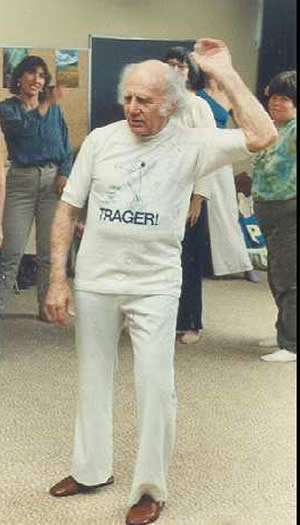
Träger and Mentastics by Harry Dalford and Julie Kingston-part of a larger article


.........I then give a very simple analogy of how muscles can be likened to a sponge. If you hold a sponge under a running tap, water will percolate through it. So the major blood vessels are the pipes feeding the tap. If you squeeze a wet sponge you will remove most of the water and if you let the sponge go it will suck the water back in.

In a muscle, blood and fluids are carrying oxygen and nutrients (amongst other things). In the process of working, the muscle uses this fuel and produces waste products that the circulation system removes to the 'waste processing plant' (kidneys / liver / skin etc). However by holding the 'Bicep' one is squeezing the 'Sponge', making it do the work, but not allowing the 'suck' part of the cycle to replace the fuel and remove the waste produce.

The longer the muscle is held in the squeeze part of the cycle the more 'waste' is produced until there is no more fuel to use. Now, the waste is a very important part of the process because it is a chemical, (essentially acidic), which acts as an irritant to the cells and nervous system receptors in the muscles and connective tissues in joints. This chemistry, for example lactic acid, is the stuff that makes your muscles feel tired and achy if they have been over worked. This is a clever design feature in the form of a bio/electrical/chemical safety valve which sends information to the brain which then sends other information to the muscles telling them to release the workload or create movement thereby allowing the "suck" part of the cycle to take the waste products away so that they are not irritating / stimulating / eroding the muscle / connective tissues / nervous system receptors.

By allowing the muscle to go though its complete design process it works efficiently and is comfortable and movement can actually be pleasurable.

Friday, March 16, 2012

The Living Matrix of Bones


Lloyd Mills Lecture Notes -3/16/12
by Wendy Woods

Quite literally cell growth, regulation and maintenance will not occur in your bones unless they are stimulated or are physically stressed. But bones are not just a separate system in the body that are isolated and functioning independently. Bones are not something that we only have to look at later to avoid osteoporosis. Bones are a living matrix woven into the very foundation of our health.

Bones effect all functions in the body from blood cell production to immune cell production, energy storage, maintaining mineral/electrolyte balances and most importantly communication. Bones communicate through force. With each impact, twist, pull, the bone produces tiny electrical signals to communicate to the bones cells to either build, breakdown, or maintain. This communication is key in the bodies ability to support activity or recover from a surgery. The skeletal system effects all other body systems and regulate itself independently of the brain. Your bone health will have a high impact on your overall well being.

Weight training and regular physical activity is the most common advice that a Doctor will give you to support your health.

So make the choice of health.

Wednesday, October 19, 2011

The Number One Form of Self Care


We can change our posture and health simply by changing the way we breath.

How to identify if you are using the right muscles when you breath:

-Locate the diaphragm by placing your hands lightly around the lower rib cage.
-Now take a big inhale

If you notice that you initiate your breath from your shoulders and they move up, more than your ribs expand out or you find that it is difficult to take a deep breath without initiating from your shoulders, then you are likely using secondary breathing muscles and your diaphragm could use some training and reeducation.

Other common symptoms of poor breathing pattern include but are not limited to head aches, tight neck and chest muscles, anxiety, depression, fatigue, sleep disorders and digestive problems.

Breathing is the foundation of all movement and functions of the body. When we are not breathing well, we are not living well. The breath goes through many adaptations a day. Some times the breath gets stuck and does not return to normal function. This is common when responsibilities pile up and the mind races, through repetitive activities or when we don’t let go of an emotional experience and stressful states. Because we have voluntary control of respiration, we can use it as a tool in our health care program to help restore healthy respiration. Different types of breathing styles facilitate different functions and activities.

Types of Breath Techniques and Applications:

1. Holding the Breath, is good for heavy load baring activities like lifting weights or quick movements because it creates a back pressure that supports the integrity of the spine. Holding a deep breath will also increase lung capacity and is used to train deep sea divers.

2. Directing the inhale or exhale, deliberately trains the capacity of the lungs and stretches and strengthens the diaphragm. This is commonly used in cardio training, child birth, lifting weight, regulating extreme emotions and pain control. It focuses the mind with a goal. Often this directed breathing is performed with a set count like 5 seconds of inhalation and 5 seconds for exhalation. The number seconds will vary based on needs, ability and practice.

3. Passive breathing, is the ability to allow the breath to move uninhibited and without directly trying to change it. This is the breath that we should use all day as well as for creating states of relaxation. It involves the ability to deepen the breath by moving out of the way and trying to release tension in the body so that the breath can fill the lungs fully with very little effort. The motto for this style is make the breath ‘long, smooth, slow, deep and even.

In the beginning brining attention to the breath is usually easier to practice in a comfortable quiet place or where you can focus easily. As you get more accustomed to breathing, practice it throughout the day. For example in the car at a stop light, in the grocery line, just before bed, during exercise. The more you practice the more you will restore your natural respiration and support a happy life.

Saturday, July 30, 2011

Learning How to Relax


How much challenge is too much? How much emotional, physical or psychological stress can one handle?

The question is not how much challenge can we handle but how well can we recover and return to homeostasis after we have been challenged? One of the first questions I ask my clients is how do you relax. Most are taken back by the question because in the fitness industry, it is only recently that the value of relaxation has been recognized by medical health professionals to be directly related to our ability to have a healthy and happy life.

The ability to relax and recovery from a sympathetic nervous system stimulation varies from person to person and is influenced by a host of factors including but not limited to history, temperament, and type of challenge. What is stressful for one person may be difficult for another person to assimilate. Knowing what challenges you and tracking your reaction is key. Do this by listening to how your biology responds. Does your heart rate increase, can you sense tension in your body, is your breathing restricted?

Exercise: Practice a full body scan. Begin in a comfortable place where you can focus on your body like in your bed, chair, or lying on the floor. Start by tensing the muscle in your feet, then while maintaing the tension in your feet began to tense your entire leg. Then both legs are tense. Continue to systematically tensing the muscles in your body until your entire body is tense. Once every muscle is tightened, hold a few seconds, then all at once relax everything. Let go of all the tension more and more, breathing freely and deeply. Repeat the exercise until you feel a deep sense of release on the letting go phase of the exercise.

This exercise will help you to learn what tension feels like and what relaxation feels like. Practice checking in on your state of relaxation throughout your day. This is a good beginning in learning how to sense your body, feeling the contrast between contraction and release.

Sunday, July 10, 2011

A Breathless Lifestyle

How do we avoid breath creating distortions and return to a natural state of breathing?

A breath distortion can effect any part of our breathing cycle; Inhalation, Exhalation and Pause. The Pause cycle of the breath is where most problems occur. The 'Pause' happens at the end of the exhalation and is the time in which we are gathering energy for the next inhalation. Without the pause our organs are compromised and will remain in a state of chronic tension and poor function. Also our nervous and circulatory system are compromised. Our overall sense of well being becomes limited.

Any event in our daily experience can cause a change in our breathing cycle and with each experience our breath is adapting as we integrate or digest our experiences. Like a tree adapts to stillness after being moved by the breeze. The problem arises when we interfere with our ability for our breath to normalize. For example, if you did not allow your breath to normalize after doing a running sprint and then went into a intense conversation with your boss or loved one, the stored tension in the breathing muscle would quickly form a habit of breathing that is distorted and will be carried through to all your future experiences.

Another example deals with being parents or caregivers. Think of a child that is crying. The neurology of a child lacks the experience to self regulate and adapt to this completely new experience of intense emotions. The child sensing the environment changing relies on the parent for cues of comfort. If these cues are not effectively communicated, the child will begin to build an internal tensional habit that will effect their breathing physiology for a life time. Parents are initially responsible for supporting their children in returning to a natural breathing state.

We currently live in "Breathless Society" or a society in which most of the citizens participate in a lifestyle that does not allow for breath awareness and adaptation. The speed at which we transition from activitiy to activity has a lot to do with how our breath is able to return to a normalized state.

Symptoms of a distorted breath pattern include and are not limited to:
Chronic Anxiety
Prone to Anger
Depression
Chronic pain
Digestion Issues
Sleep disturbances

To develop a relationship with your breath will take a kinesetic sense or a sense of your body as it is breathing. If you are not familiar with your breath in a natural state seek out a teacher, like me, to help you learn an invaluable skill.

Monday, July 4, 2011

Work the Breath Muscle


The Diaphragm, the primary breathing muscle, is the only muscle that lies perpendicular to the spine in the body. When we don't use our diaphragm to breath we can end up with what I call a paralyzed diaphragm. A paralyzed diaphragm occurs when we use secondary breathing muscles like the commonly used pectorals,sterno-cleido mastoid and the scalene muscles. If one has a paralyzed diaphragm it is also likely that other primary breathing structures will be inhibited as well, such as the ribs. The rib muscles, tendons, cartilage and ligaments all move with every cycle of breath. It is important that every rib moves with expansion and contraction. Unresolved, intense past emotional experiences are one reason for breath distortions and can remain stuck in ones breathing cycle.

Exercise: Try bringing your attention to the place where the air is just entering your nose. This is the gate from the outer world to your inner world. As the air enters your body begin to track how it outlines your inner landscape or the space that is inside of you. Use your breath to find how each rib moves exploring the entire dimension of your rib cage with each breath: The front ribs, the side ribs and the back ribs. On inhalation, feel your ribs began to expand from the lower ribs first. Then like a ladder how each rib expands upward until you get to the very top of the rib cage at the base of the neck.

Tuesday, June 28, 2011

Types of Tired


There could be many reasons for fatigue and the feeling of being tired but the top are as follows.

Top Five Reasons for Being Tired:
1. Lack of oxygen due to restricted or shallow breathing patterns- Hyperventilation breathing cycles are common with low grade stress and chronic anxiety. This means that every time you inhale you don't get enough oxygen and this creates a signal that the body interprets as stressful, creating a cycle of restricted inhalations.

2. Dehydration- We need approx. 1/2 your body weight,in ounces, in water a day. Example if you are 150 lbs. you would need 75 oz. of water daily. If you drink diuretics like coffee and tea or sweat while exercising you will need to drink more. Most of the time when we are looking for something or have some confusion of what to do next, we are actually looking for water.

3. Over work or lack of rest- Are you tired from over-stimulation, doing to much and you need to rest because your adrenals are overworked. Adrenal fatigue is common and a simple test from your Doctor can help you get a diagnosis.


4. Under worked or lack of movement-Are you tired because you have stagnate blood and poor circulation of nutrients, lack of oxygen and stimulation.A good way to know is if your energy levels increase or decrease after moderate exercise.


5. Nutrient Deficiency, Allergies, Blood Sugar Fluctuations- These are common and often less obvious causes of fatigue. A Doctor of Naturopathy or nutritionist are the best for diagnosing and treating these issues. Secondarily, I would not recommend your general practitioner because they only get nutrition as an elective in college and often an average nutritionist will know more.